Gardening Tips
Companion Planting NZ Spring: Veg, Herbs & Flowers
4 September 2026 · 8 min read
🌱 What Is Companion Planting — and Why Does It Matter in NZ Spring?
Companion planting NZ spring gardeners swear by is one of the oldest and most rewarding techniques in the veggie patch. Put simply, it's the practice of growing different plants close together so they actively help one another — deterring pests, attracting pollinators, enriching the soil, and making the most of every square centimetre of garden space. As the soil warms up between September and November and Kiwi gardeners start sowing and transplanting in earnest, pairing the right plants is one of the smartest moves you can make for a bumper summer harvest.
Whether you're gardening in the warm, humid conditions of Northland, the long sunny days of Hawke's Bay, or the cooler, windier plots of Otago and Southland, companion planting can be tailored to your region. It reduces your reliance on sprays and synthetic fertilisers, encourages biodiversity, and — honestly — makes the garden look absolutely beautiful.
🌿 How Companion Planting Actually Works
Before diving into specific pairings, it's worth understanding the main mechanisms at play. Companion plants support each other in a handful of key ways:
Pest confusing and masking: Strong-scented herbs like basil and tansy release aromatic compounds that confuse or repel common garden pests.
Attracting beneficial insects: Flowers such as marigolds, borage, and phacelia draw in hoverflies, lacewings, and bees that pollinate crops and predate aphids.
Nitrogen fixing: Legumes (beans, peas, clover) draw nitrogen from the air and deposit it in the soil via root nodules, feeding neighbouring heavy-feeders like corn and brassicas.
Ground cover and moisture retention: Low-growing plants like nasturtiums and lettuce act as a living mulch, shading the soil and reducing moisture loss.
Physical support: Tall crops like corn or sunflowers provide a natural trellis for climbing beans.
🍅 The Best Companion Planting Combinations for NZ Spring
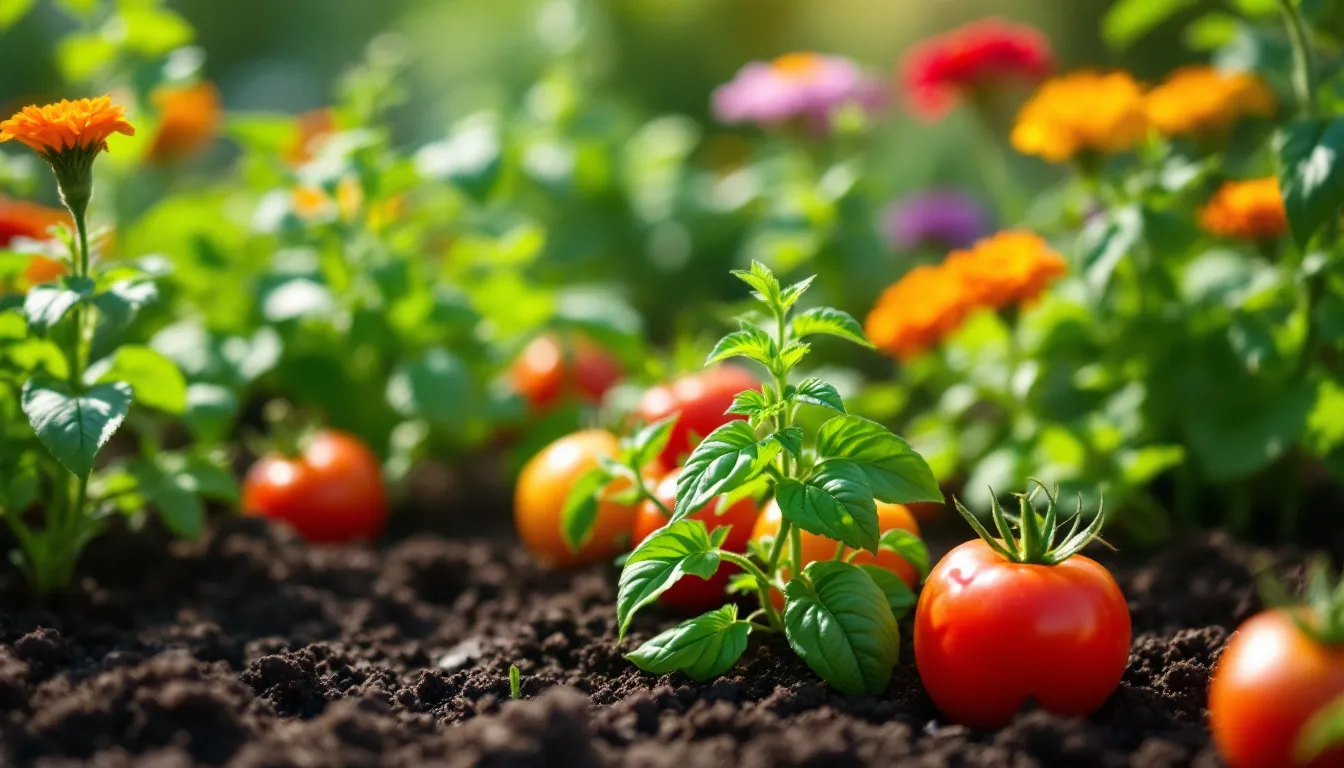
Tomatoes + Basil + Marigolds
This is arguably the most famous trio in companion planting — and for good reason. Tomatoes are heavy feeders and a target for whitefly, aphids, and the dreaded tomato-potato psyllid. Basil planted closely is believed to repel aphids and whiteflies with its volatile oils, while also being a wonderfully productive herb to harvest all summer long. French marigolds (Tagetes patula) are the superstar here: their roots produce a substance that suppresses soil nematodes, and their bright flowers lure hoverflies whose larvae devour aphids.
In warmer northern regions, you can get tomato seedlings in the ground from late September. Further south, wait until after your last frost date — mid-to-late October in many Canterbury and Otago gardens. Plant basil at the same time and tuck marigolds around the border of the bed.
Beans + Corn + Squash (The Three Sisters)
This traditional planting system has been used for centuries and translates brilliantly to New Zealand gardens. Corn provides a climbing frame for beans, beans fix nitrogen in the soil for the hungry corn and squash, and squash sprawls at ground level acting as a living mulch that keeps weeds down and moisture in.
Sow corn from mid-October once soil temperatures have reached at least 16°C. Plant climbing beans around the base of the corn once it's about 15–20 cm tall, then place squash seedlings between the mounds. It's a space-efficient, low-input system that rewards you with three different crops.
Brassicas + Nasturtiums + Dill
Cabbages, broccoli, cauliflower, and kale are all beloved by white butterfly and cabbage aphids. Nasturtiums act as a brilliant trap crop — white butterfly caterpillars and aphids are drawn to them first, keeping your brassicas cleaner. Meanwhile, dill attracts parasitic wasps that lay their eggs in white butterfly caterpillars, naturally reducing pest populations.
Interplant nasturtiums and dill generously throughout your brassica bed from September onwards. Don't be alarmed when the nasturtiums get a bit munched — that's the whole point!
Carrots + Onions + Leeks
Carrot fly and onion fly are common problems in New Zealand vegetable gardens, but these two crops actually protect each other. The pungent scent of onions and leeks confuses and deters carrot fly, while carrots return the favour by masking the smell that attracts onion fly. Sow carrot seed and plant onion or leek seedlings in alternating rows from September, and you'll have a mutually beneficial relationship right through to harvest.
Roses + Garlic + Chives
Not all companion planting happens in the veggie garden. If you grow roses, underplanting them with garlic or chives is a classic technique for deterring aphids and black spot. The allium family releases sulphur compounds that are thought to act as a natural fungicide and pest deterrent. As a bonus, chives produce gorgeous purple flowers that pollinators adore.
Lettuce + Tall Brassicas or Tomatoes
Lettuce prefers cooler conditions and bolts quickly in full summer sun. Planting it in the dappled shade of taller crops like tomatoes or staked brassicas gives it shelter, extending your harvest well into the warmer months. This is especially useful in Northland, Auckland, and Waikato where spring heat can arrive suddenly.
🌸 Flowers That Earn Their Place in the Veg Patch
It's worth dedicating a whole section to flowers, because they are far more than decoration in a companion-planted garden. Here are the top performers for NZ spring:
French Marigolds: Repel nematodes, attract hoverflies and bees. Plant throughout the entire garden.
Borage: Draws bees prolifically and is said to deter tomato hornworm. Its leaves and flowers are edible too.
Phacelia: A quick-growing annual with lavender-blue flowers that is one of the best bee attractants available. Excellent as a spring green manure and pollinator magnet.
Nasturtiums: Trap crop for aphids and white butterfly, edible flowers, and ground cover — they do it all.
Sweet Alyssum: Low-growing with tiny white flowers that attract hoverflies. Plant as a border or between rows.
Calendula: Bright, cheerful, and reputed to deter a range of pests. The flowers are also great in the kitchen and for skin preparations.
🚫 Companions to Avoid — Bad Plant Neighbours
Just as some plants bring out the best in each other, others are genuinely bad neighbours. Keep these pairings apart:
Fennel: Fennel is allelopathic — it releases chemicals that inhibit the growth of most vegetables. Give it its own isolated spot in the garden.
Onions + Beans or Peas: Alliums are thought to stunt the growth of legumes. Keep them well separated.
Brassicas + Strawberries: These two compete for nutrients and neither tends to thrive when planted together.
Tomatoes + Fennel or Brassicas: Tomatoes and brassicas are both heavy feeders that compete aggressively; fennel actively inhibits tomato growth.
Potatoes + Tomatoes: Both are in the Solanaceae family and share diseases like blight. Keeping them apart reduces disease spread.
🗓️ Timing Your Spring Companion Plantings by NZ Region
New Zealand's length means spring arrives at very different times across the country. Here's a rough guide:
Northland, Auckland, Waikato: Get started in early September. Soil warms quickly and frost risk is minimal. Tomatoes, basil, and beans can go in from late September.
Bay of Plenty, Gisborne, Hawke's Bay: Mid-September is a safe start for most companions. Excellent growing conditions through to summer.
Wellington, Nelson, Marlborough: Late September to early October for frost-tender companions. Brassica companions can go in from early September.
Canterbury, West Coast: Frost risk lingers into October. Start cold-tolerant companions (carrots, onions, leeks, nasturtiums) in September; hold off on tomatoes and basil until mid-to-late October.
Otago, Southland: Be patient — a late frost can sneak up in October. Play it safe with tender seedlings until the second half of October or even early November.
🛒 Ready to Get Growing? Shop at Botanical Love
At Botanical Love, we stock a fantastic range of companion planting essentials to set your spring garden up for success. Browse our collections of:
Vegetable seeds — tomatoes, beans, brassicas, carrots, and more, chosen for NZ conditions
Herb seeds and seedlings — basil, dill, chives, borage, and beyond
Flower seeds — marigolds, nasturtiums, calendula, phacelia, and sweet alyssum
Organic garden supplies — compost, liquid fertilisers, and soil conditioners to give your companion planting the best possible foundation
Head to botanicallove.co.nz and explore everything you need for a thriving, biodiverse spring garden right here in Aotearoa.
Frequently Asked Questions
When should I start companion planting in NZ spring?
For most of New Zealand, September is the sweet spot to begin planting cold-tolerant companions like carrots, onions, nasturtiums, and brassicas. Wait until mid-to-late October for frost-tender combinations involving tomatoes and basil, especially in the South Island.
Do marigolds really work as pest deterrents?
French marigolds (Tagetes patula) have solid evidence behind them — their roots produce alpha-terthienyl, which suppresses soil nematodes, and their flowers are genuine magnets for hoverflies and other beneficial insects. Plant them generously throughout your garden for best results.
Can I companion plant in raised beds or containers?
Absolutely! Companion planting is actually ideal for raised beds and even large containers, where you can control soil quality and space plants deliberately. A pot with a tomato, a basil plant, and a marigold around the edge is a compact, practical example.
Is companion planting enough to replace pest sprays entirely?
Companion planting significantly reduces pest pressure but is best thought of as one tool in an integrated approach. Combined with good garden hygiene, crop rotation, and healthy soil, many NZ gardeners find they can greatly reduce or eliminate spraying — though results vary by season and location.
What is the easiest companion planting combination for beginners?
Start with the tomato–basil–marigold trio. It's easy to establish, involves plants most NZ gardeners grow anyway, and gives you an immediate, tangible benefit: better pest control, great flavour from the basil, and a beautiful, colourful bed to boot.
— Botanical Love
Keep reading
More from the Blog
Gardening Tips
Hardening Off Seedlings NZ Spring: The Complete Guide
Learn how to harden off tomato, pepper & basil seedlings in NZ spring. Step-by-step advice for every region, from Northland to Southland. Don't lose a single plant!
Vegetables
Transplanting Tomato Seedlings NZ Spring: Full Guide
Learn how to harden off & transplant tomato seedlings in NZ this September. Expert tips for every region, from Northland to Southland. Bumper crop guaranteed!