🌱 How to Grow Egyptian Walking Onions in NZ ✨
11 July 2026 · 5 min read
🌱 Meet the Most Exciting Onion You've Never Grown
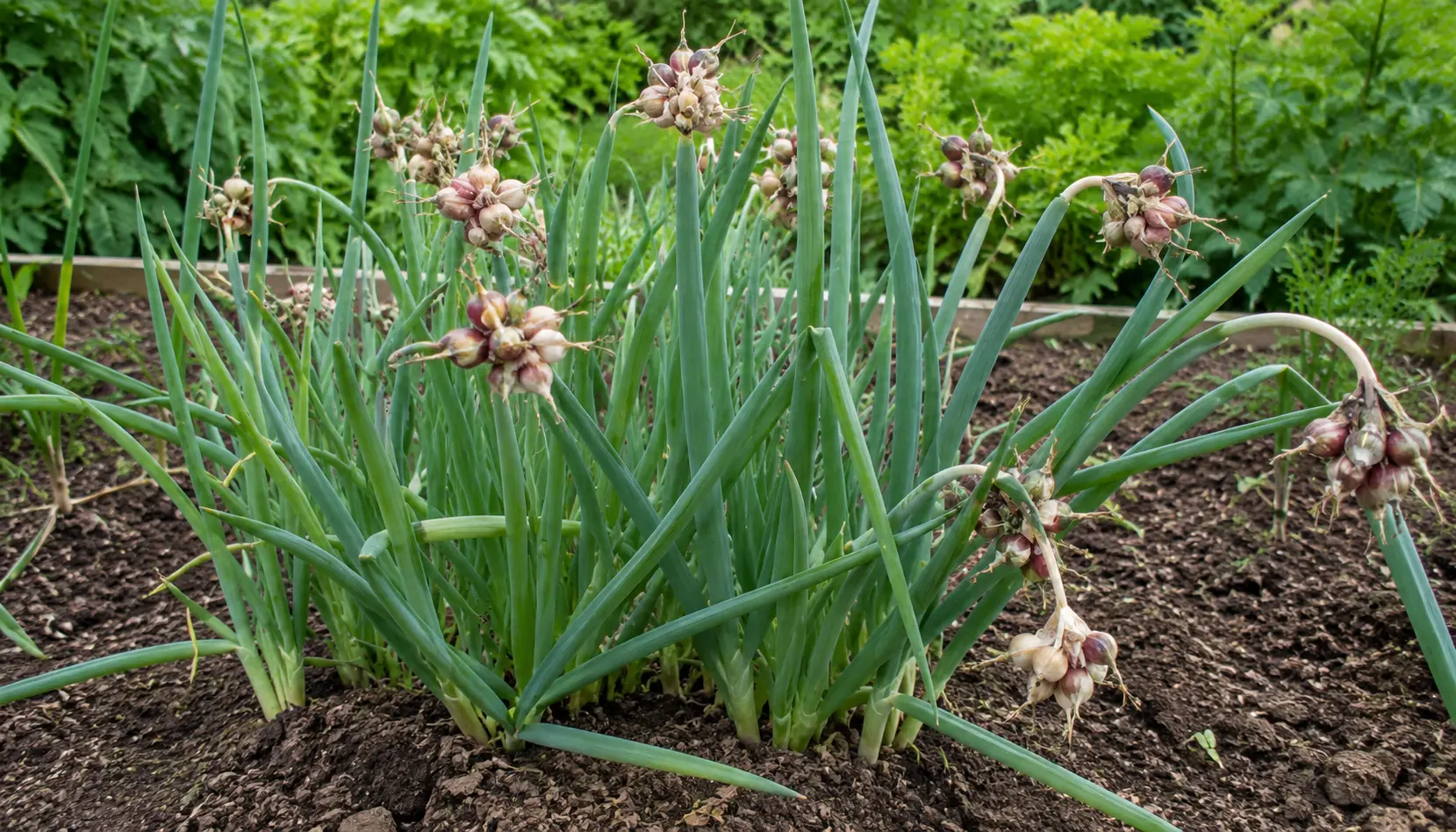
If you've never heard of Egyptian walking onions NZ gardeners are quietly obsessing over, get ready to fall completely in love! 🥰 Also known as tree onions or top-setting onions (Allium proliferum), these remarkable perennial plants are unlike anything else in the vegetable garden. Instead of forming a single bulb underground like regular onions, they grow clusters of small bulbils right at the tops of their tall stems — and when those stems get heavy enough, they arch over, touch the soil, and plant themselves. That's right: they literally walk across your garden! ✨ How amazing is that? Once you grow them, you'll wonder how your garden ever managed without them.
🌿 What Are Egyptian Walking Onions?
Egyptian walking onions are a fascinating ancient variety — believed to be a hybrid of the common onion and the ever-ready onion — with a gardening history stretching back centuries. They're a true perennial onion NZ growers can rely on year after year, meaning you plant them once and they keep on giving. 💚 Every part of the plant is edible: the hollow green tops (use them like spring onions or chives), the underground bulbs (use like shallots or small onions), and the topset bulbils themselves (pickle them — they're divine!).
They're also incredibly hardy. From Northland's humid summers to Southland's frosty winters, Egyptian walking onions handle the full range of NZ conditions with barely a complaint. If you're dreaming of a low maintenance vegetable garden NZ-wide, these little legends absolutely belong in it! 🌈
☀️ When to Plant Walking Onions in NZ
Knowing when to plant walking onions NZ-wide is simple — and the good news is, they're flexible! The ideal planting windows are:
Autumn (March–May): The very best time. Plant bulbils or divisions in autumn and they'll establish roots over winter, rewarding you with vigorous spring growth. Spring (September–November): A perfectly fine alternative if you missed the autumn window. Cooler spring soil suits them beautifully.
In warmer northern regions like Auckland, Northland, and the Waikato, you can plant almost any time outside of the peak summer heat. In cooler southern regions — Canterbury, Otago, and Southland — autumn planting gives roots the best chance to settle in before the ground freezes. 🌍
🪴 How to Plant Egyptian Walking Onion Bulbils
Planting Egyptian walking onion bulbils is one of the most satisfying and joyful gardening moments — imagine popping these tiny, curious little clusters into the earth and knowing they'll reward you for years! Here's exactly how to do it:
Choose your spot: Full sun is ideal (at least 6 hours a day), though they'll tolerate partial shade. Good drainage is essential — they hate soggy roots. Prepare the soil: Dig in plenty of compost or aged manure to enrich your bed. Walking onions are not heavy feeders, but they'll thrive in loose, fertile, well-draining soil with a pH between 6.0 and 7.0. Plant the bulbils or divisions: Press bulbils about 2–3 cm into the soil, spacing them 15–20 cm apart. If you're dividing an established clump, separate the underground bulbs and replant at the same depth they were growing. Water in well: Give them a good drink after planting, then water regularly until established. After that, they're remarkably drought-tolerant! 💚 Mulch generously: A layer of straw or pea-straw mulch (5–8 cm) will keep moisture in, suppress weeds, and protect roots in colder regions. 🌻 Tree Onion Care Tips Through the Seasons
One of the best things about these plants — and there are so many best things! — is how little fuss they require. Here are your key tree onion care tips to keep your patch thriving all year round:
Watering
Water consistently during dry spells, especially in their first season. Once established, Egyptian walking onions are surprisingly drought-tolerant — perfect for those hot NZ summers when the hose feels like a full-time job! ☀️
Feeding
A light dressing of compost or a balanced organic fertiliser in early spring will keep your plants happy. Avoid heavy nitrogen feeds, which push leafy growth at the expense of bulb development.
Letting Them Walk
Here's where the magic happens! 🌟 As the topset bulbils grow heavy, the stems naturally arch over and touch the ground. You can either let them self-plant (they'll form a new colony naturally — true walking onion behaviour!) or collect the bulbils to replant or eat. Allowing them to walk expands your patch effortlessly over time.
Walking Onion Companion Planting
Walking onion companion planting is a brilliant idea — these onions repel many common garden pests, making them excellent neighbours for tomatoes, carrots, beetroot, and brassicas. Dot them around your vegetable beds as a living pest deterrent. 🐝
🌼 Walking Onion Harvest Time — When and How
Understanding your walking onion harvest time is key to getting the most from every part of this incredible plant:
Green tops: Snip these any time once the plant is established — treat them just like spring onions or chives. They'll regrow readily. 🌿 Topset bulbils: Harvest when the clusters are plump and the skins are papery (usually summer). Use fresh, pickle them in vinegar and herbs, or replant to expand your patch. Underground bulbs: Lift some each autumn as you divide your clump. Use them like small shallots — roasted, pickled, or raw in salads. ✨
The beauty of growing this edible perennial plant NZ gardeners adore is that you never have to start from scratch. Just leave some bulbs in the ground, and your onions will come back stronger and more prolific every single year! 🥰
🌱 How to Propagate Egyptian Onions
Learning how to propagate Egyptian onions is genuinely exciting because it's almost embarrassingly easy! You have two main methods:
From Topset Bulbils
Simply detach the small bulbils from the topset cluster and press them into prepared soil. Within a few weeks, you'll see those first little green shoots pushing up — one of the most rewarding sights in the garden! 🌱
By Division
Every couple of years (or whenever your clump looks crowded), dig up the underground bulb cluster in autumn, gently separate the bulbs, and replant them with fresh compost. This reinvigorates the original plant AND gives you new starts to spread around — or share with a friend. Sharing plants is one of life's great joys! 💚
✨ Why Walking Onions Belong in Every NZ Vegetable Garden
Among all the onion varieties for New Zealand gardens, Egyptian walking onions hold a very special place. They're one of the most unusual vegetables to grow NZ-wide — a real conversation starter that will have visitors doing a double-take at your garden! 🌈 But beyond their novelty, they're deeply practical: productive, perennial, pest-repelling, and packed with flavour. Whether you grow a small courtyard pot garden in Wellington or a sprawling rural veggie patch in Hawke's Bay, walking onions will fit right in and reward you season after season.
If you love the idea of filling your garden with heritage and heirloom varieties, Egyptian walking onions sit beautifully alongside heirloom vegetable seeds NZ collections — they carry that same wonderful sense of growing something with history, character, and real food value. 🌻
💚 Shop the Range at Botanical Love
Ready to start your walking onion journey? 🥰 At Botanical Love, we stock a wonderful range of edible perennial plants, onion sets, and heirloom vegetable seeds perfectly suited to NZ gardens — from Northland all the way to Southland. Browse our Vegetable Seeds & Sets category to find Egyptian walking onions and other exciting perennial edibles, and check out our Gardening Supplies range for quality compost, organic fertilisers, and mulch to give your new plants the very best start. Head to botanicallove.co.nz and let the planting adventures begin! ✨
🌿 Frequently Asked Questions Are Egyptian walking onions available to buy in NZ?
Yes! Walking onion sets and bulbils are becoming increasingly available through NZ specialty garden suppliers and online stores like Botanical Love. They're well worth seeking out — once you have them, you'll never need to buy walking onion sets NZ-wide again, because they multiply themselves so freely!
Can I grow Egyptian walking onions in a pot or container?
Absolutely — and they look gorgeous in a large pot on a sunny balcony or deck! Choose a container at least 30 cm deep and wide, use a quality vegetable mix, and ensure good drainage. They're one of the best options for growing tree onions in New Zealand urban gardens with limited space.
How long do Egyptian walking onions take to establish?
Planted in autumn, you can expect to start harvesting green tops by the following spring — just a few months away. By their second year, your clump will be well established and producing prolifically. Good things come to those who plant! 🌱
Do walking onions survive NZ frosts?
Yes! They're wonderfully frost-hardy and will die back to the ground in very cold winters, only to re-shoot vigorously in spring. In most NZ regions, the foliage stays green year-round. They're genuinely one of the toughest perennial onions NZ gardeners can grow.
What do Egyptian walking onions taste like?
The flavour is pleasantly strong — somewhere between a spring onion and a shallot, with a mild garlicky warmth. The green tops are milder and perfect fresh; the underground bulbs are more pungent and wonderful roasted or pickled. Every part is delicious! 🥰
Do I need to replant walking onions every year?
Not at all — that's the whole beautiful point! As a true perennial, once planted they return year after year with zero replanting required. Simply manage the clump by dividing every few years to keep plants vigorous. They're a genuine 'plant it once, enjoy it forever' treasure. ✨
— Botanical Love
Keep reading
More from the Blog
Zucchini Chutney & Relish: Make Your Own NZ Garden 🌱✨
🌱 From Garden Glut to Gorgeous Jars — Zucchini Chutney Relish NZ Style If you've ever grown zucchinis in a New Zealand summer, you know the joy — and the mild panic — of watching your plants produce way more than you bargained for! 🥰 That's exactly why learning to make your own zucchini chutney relish NZ style is such a game-changer. Instead of giving away bags of courgettes to every neighbour on the street, you can transform that beautiful bumper harvest into jars of golden, flavour-packed chutney and relish that you'll treasure all year long. ✨ Imagine opening your pantry in the middle of winter and pulling out a jar of summer sunshine you made with your own hands — how amazing is that?!
🌿 Grow & Process Your Own Sugar Cane into Sugar in NZ!
If you've ever dreamed of producing your very own sweetener straight from the garden, learning to grow sugar cane NZ-style is one of the most exciting and rewarding projects you can take on! 🌱 Sugar cane (Saccharum officinarum) is a magnificent, towering tropical grass that thrives surprisingly well in the warmer corners of Aotearoa — and the best part is, it's far more achievable than most Kiwi gardeners realise. Imagine walking out to your backyard, harvesting a bundle of golden canes, and squeezing fresh juice to make your very own raw sugar or golden syrup. How amazing is that?! This guide walks you through absolutely everything — from choosing the right variety and finding the perfect spot, all the way through to processing your harvest into real, homemade sweetness. ✨