🌱 How to Grow Beans from Seed in NZ — Full Guide
11 July 2026 · 5 min read
🌱 Why Growing Beans from Seed Is One of Life's Greatest Joys
If you're looking to grow beans from seed for the very first time, you are in for an absolute treat! 🥰 Beans are one of the most satisfying, beginner-friendly vegetables you can grow in the New Zealand garden — they sprout fast, produce abundantly, and reward even the most casual gardener with armfuls of fresh pods. Whether you're gardening on a sunny Northland deck or in a Canterbury raised bed, beans will absolutely love your patch of Aotearoa. The best part is that all you need to get started is a packet of quality seeds and a little enthusiasm — let's dive in! 🌿
☀️ When to Plant Beans in NZ — Timing Is Everything
Knowing when to plant beans in NZ is the single most important step for a successful crop. Beans are warm-season vegetables and absolutely hate frost — their seeds will simply rot in cold soil rather than sprout. As a general rule, wait until soil temperatures are consistently above 16°C, which in most parts of New Zealand means:
Northland, Auckland & Bay of Plenty: From late September (early spring) onwards Waikato, Hawke's Bay & Wellington: October through to early November Nelson, Canterbury & Otago: November is your safest bet Southland & the deep south: Wait until late November or even early December
You can also do a second sowing in late summer vegetable seeds NZ gardeners often miss — a late January or early February planting in warmer regions gives you a second flush of pods before the cool nights return. How amazing is that? ✨ Keep an eye on your overnight temperatures and you'll be golden.
🌿 Bush Beans vs Climbing Beans — Which Should You Grow?
Before you reach for a packet of seeds, it helps to understand the two main types you'll encounter. The debate of bush beans vs climbing beans really comes down to your space and how hands-on you want to be. 🪴
Bush Beans
Bush beans are compact, self-supporting plants that grow to around 40–60 cm tall and produce a concentrated burst of pods over a few weeks. They're perfect for smaller gardens, containers, or anyone who wants a quick, tidy harvest. Varieties like 'Tendergreen' and 'Blue Lake Bush' are absolute classics in the NZ veggie patch and are easy to find at any good seed supplier.
How to Grow Climbing Beans
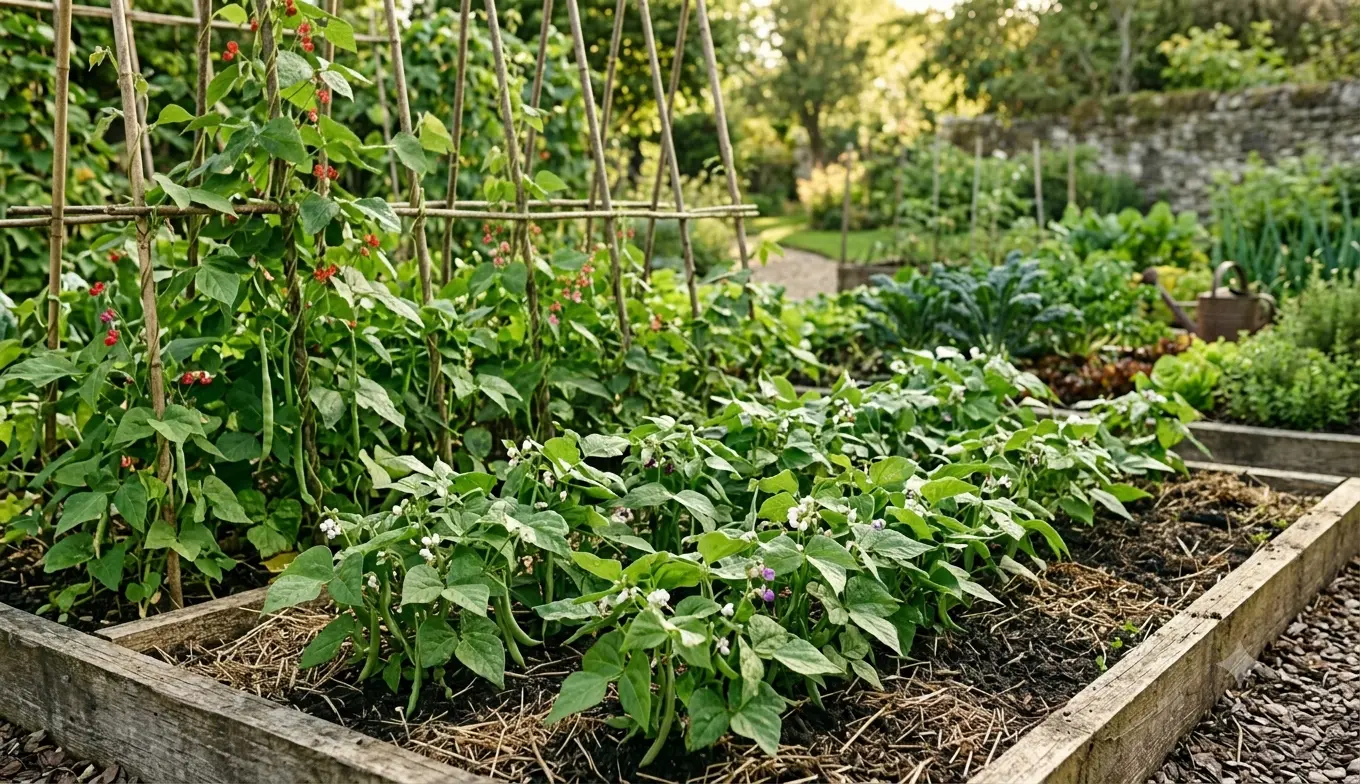
If you've got a fence, trellis, or a set of bamboo poles, then learning how to grow climbing beans will unlock a whole new level of productivity in your garden! 🌈 Climbers like 'Purple King', 'Kentucky Wonder', and 'Lazy Housewife' (a gorgeous heirloom) can reach 2–3 metres tall and produce over a far longer season than their bush cousins. They're ideal for growing beans in raised beds alongside a sturdy support structure — and they look absolutely spectacular too.
🌱 Bean Seed Germination Tips for a Flying Start
One of the most exciting moments in gardening is watching those first little shoots push up through the soil! 💚 Great bean seed germination tips will make sure every seed counts. Here's what works beautifully in the NZ climate:
Sow directly into the ground — beans really dislike being transplanted, so skip the seed tray and sow straight into your prepared garden bed or container. Sow 3–4 cm deep and space seeds about 10 cm apart in rows 40–50 cm apart. Pre-soak your seeds overnight in warm water to soften the seed coat and speed up germination — you can expect to see sprouts in as little as 5–7 days in warm soil! Keep the soil moist but not waterlogged — soggy conditions are the number-one cause of seed rot. Cover lightly with fine compost after sowing to retain warmth and moisture around the seed.
Understanding how long do beans take to grow from seed to harvest is really handy for planning. Most bush varieties are ready to pick in 55–65 days, while climbing types take a little longer at 65–75 days but then keep producing for weeks. 🌻
🥬 Soil, Sun & Water — Setting Your Beans Up to Thrive
Beans are famously easy-going, but they do have a few preferences that will make your crop go from good to absolutely brilliant! When it comes to vegetable gardening NZ beginners often overlook soil prep — and it really does make all the difference. 🌿
Soil Preparation
Beans thrive in a well-draining, loamy soil with a pH of around 6.0–7.0. Dig in a good amount of aged compost before planting, but hold off on heavy nitrogen fertilisers — beans are nitrogen fixing plants NZ gardeners can rely on to actually improve soil fertility as they grow! They have special root nodules that pull nitrogen from the air and deposit it into the soil. How cool is that? 🌱 This makes them a wonderful crop to rotate through your beds each season.
Sunlight & Watering
Beans love a full-sun position — aim for at least 6–8 hours of direct sunlight per day. Water consistently at the base of the plant (avoid wetting the foliage, which can encourage disease), and aim for around 2–3 cm of water per week. In hot Canterbury or Hawke's Bay summers, you may need to water daily. A layer of mulch around the base of your plants will keep roots cool and moisture locked in. ☀️
🐝 Companion Planting with Beans — Friends in the Garden
Beans play beautifully with many other veggie patch favourites, and leaning into companion planting with beans can boost your whole garden's health! 🥰 The classic 'Three Sisters' planting — beans, corn, and pumpkin together — has been used by Indigenous peoples for thousands of years, and for very good reason. The beans fix nitrogen for the corn, the corn provides a climbing pole for the beans, and the pumpkin's broad leaves suppress weeds and retain moisture. Give it a go in your summer garden — it's genuinely magical to watch unfold. 🌈
Beans also grow happily alongside carrots, cucumbers, and most brassicas. Avoid planting near onions, garlic, or fennel, which can stunt bean growth.
✨ Bean Seedling Care — From Sprout to Harvest
Once your seedlings are up, bean seedling care is wonderfully low-maintenance — which is one of the many reasons we love them so much! 💚 Here's what to keep an eye on:
Thin seedlings to about 15–20 cm apart once they reach 5 cm tall, choosing the strongest plants. Set up supports early for climbing varieties — don't wait until they're flopping around. Bamboo tepees or a simple wire trellis work brilliantly. Watch for slugs and snails on young seedlings, especially in wetter regions like the West Coast or Wellington. Copper tape or organic bait works well. Avoid high-nitrogen liquid feeds once plants are growing — too much nitrogen encourages leafy growth at the expense of pods. Hand-pollinate on very still days if you notice poor pod set — a quick gentle shake of the flowers does the trick. 🌻 Harvesting Beans in NZ — Pick Often, Pick Plenty!
Harvesting beans NZ style is all about keeping up with your plants! The golden rule: pick beans young and often. As soon as pods are plump and snap crisply — usually when they're around 10–15 cm long — they're ready to go. If you leave pods on the plant too long they become tough and stringy, and the plant will slow production. Aim to pick every 2–3 days at peak season. 🌿
For the best bean varieties NZ gardeners love, don't sleep on heirloom options — 'Dragon Tongue' (a stunning yellow-purple streaked flat bean), 'Borlotti' (perfect for drying), and the ever-reliable 'Blue Lake' are all superb choices for the NZ climate. You'll absolutely love the variety available when you explore our seed range!
💚 Shop the Range at Botanical Love
Ready to grow beans from seed and fill your garden with gorgeous green abundance? 🌱 Head over to botanicallove.co.nz and explore our wonderful range of vegetable seeds, including an exciting selection of bean varieties — from classic bush beans to heirloom climbers. While you're there, check out our gardening supplies section for compost, organic fertilisers, and everything else you need to get your veggie patch thriving this season. You'll find everything to make this your best growing season yet! ✨
🌿 Frequently Asked Questions When is the best time to plant beans in New Zealand?
The best time to plant beans in NZ is from late September through to February, depending on your region. Wait until soil temperatures are reliably above 16°C and all risk of frost has passed. Warmer northern regions like Auckland can start in early spring, while Southland gardeners should wait until late November or December.
Can I grow beans in pots or containers?
Absolutely! Bush bean varieties are particularly well suited to growing in containers — choose a pot at least 30 cm deep and wide, use a quality potting mix, and make sure it drains well. Place your container in the sunniest spot you have and water consistently. Climbing beans can be grown in larger containers (40 cm+) with a sturdy trellis or bamboo support.
Do beans need fertiliser?
Beans are nitrogen fixing plants, which means they create their own nitrogen from the air — so you don't need to add nitrogen-heavy fertilisers. A good dose of compost worked into the soil before planting is usually all they need. If plants look a little pale mid-season, a light liquid feed of seaweed solution will perk them right up without overdoing it.
Why aren't my bean seeds germinating?
The most common reason is cold soil — bean seeds simply won't sprout if soil temperatures are below 16°C. Other causes include over-watering (leading to rot), sowing too deep, or old seeds with low viability. Try pre-soaking seeds overnight and ensuring your soil is warm and moist but not waterlogged. Buying fresh, quality seeds each season also makes a big difference!
How do I save bean seeds for next year?
Bean seed saving is wonderfully easy and very rewarding! 🌱 Simply leave a few of your best pods on the plant until they are completely dry and papery. Shell the seeds and spread them out to dry indoors for a further two weeks, then store in a cool, dry, dark place in an airtight container or paper envelope. Properly saved bean seeds stay viable for 2–4 years.
Are beans good for the soil?
Yes! Beans are one of the best crops you can grow for soil health. As nitrogen fixing plants, they work with beneficial soil bacteria to convert atmospheric nitrogen into a form that plants can use — essentially fertilising your garden for free. After harvest, chop the spent plants into the soil or compost them to return that goodness to your garden beds.
— Botanical Love
Keep reading
More from the Blog
Zucchini Chutney & Relish: Make Your Own NZ Garden 🌱✨
🌱 From Garden Glut to Gorgeous Jars — Zucchini Chutney Relish NZ Style If you've ever grown zucchinis in a New Zealand summer, you know the joy — and the mild panic — of watching your plants produce way more than you bargained for! 🥰 That's exactly why learning to make your own zucchini chutney relish NZ style is such a game-changer. Instead of giving away bags of courgettes to every neighbour on the street, you can transform that beautiful bumper harvest into jars of golden, flavour-packed chutney and relish that you'll treasure all year long. ✨ Imagine opening your pantry in the middle of winter and pulling out a jar of summer sunshine you made with your own hands — how amazing is that?!
🌿 Grow & Process Your Own Sugar Cane into Sugar in NZ!
If you've ever dreamed of producing your very own sweetener straight from the garden, learning to grow sugar cane NZ-style is one of the most exciting and rewarding projects you can take on! 🌱 Sugar cane (Saccharum officinarum) is a magnificent, towering tropical grass that thrives surprisingly well in the warmer corners of Aotearoa — and the best part is, it's far more achievable than most Kiwi gardeners realise. Imagine walking out to your backyard, harvesting a bundle of golden canes, and squeezing fresh juice to make your very own raw sugar or golden syrup. How amazing is that?! This guide walks you through absolutely everything — from choosing the right variety and finding the perfect spot, all the way through to processing your harvest into real, homemade sweetness. ✨