Best Plants to Grow Around a Garden Pond
11 May 2026 · 5 min read
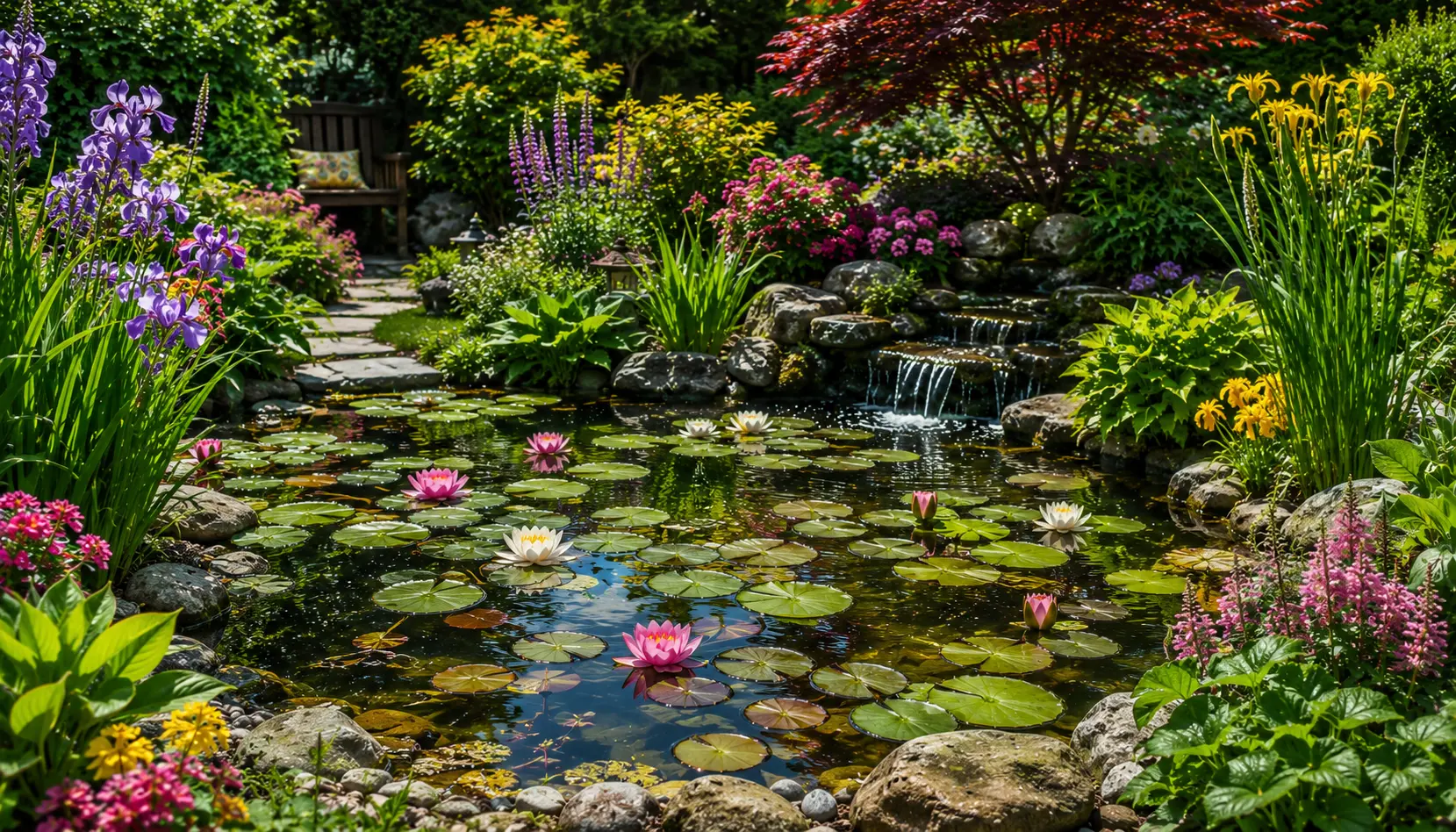
From the water's edge to the boggy banks beyond — the right planting transforms a garden pond from a water feature into a living, breathing ecosystem.
A garden pond without plants is like a room without furniture, functional, perhaps, but missing everything that makes it feel alive. The best plants for a garden pond do far more than look beautiful. They oxygenate the water, provide shelter for wildlife, soften hard edges, and create the layered, naturalistic look that turns a simple pond into the true heart of a garden.
Whether you're designing a brand new wildlife pond or refreshing the banks of an existing one, this guide covers everything you need to know about pond edge planting, including the best species for each zone, how to plant them, and which combinations work best together.
Understanding pond planting zones
Before choosing plants, it helps to understand that a pond isn't one uniform habitat, it's a series of distinct zones, each with its own moisture level and depth. Pond planting zones typically fall into four categories: deep water, shallow marginal, bog or wet soil, and moisture-loving border planting.
Getting the right plant in the right zone is the difference between a thriving, low-maintenance pond garden and one that constantly struggles. The good news is that once established, a well-planted pond is largely self-sustaining.
"A pond surrounded by thoughtful planting becomes a different world, a place where every visit reveals something new, something growing, something wild."
Marginal plants: the stars of the pond edge
Pond marginal plants grow in shallow water — typically between 5cm and 30cm deep — and form the signature silhouette of a well-planted pond. They're the architectural backbone of any pond edge planting scheme, providing height, movement, and vital habitat for dragonflies, damselflies, and nesting birds.
Yellow flag iris Iris pseudacorus A native classic. Tall sword-like leaves and vivid yellow flowers in early summer. Excellent for wildlife and very robust. Marsh marigold Caltha palustris One of the earliest spring bloomers, with glossy leaves and brilliant golden flowers. A magnet for early pollinators. Purple loosestrife Lythrum salicaria Tall spires of magenta-purple flowers from midsummer. Loved by bees and butterflies — a true wildlife plant. Water mint Mentha aquatica Aromatic foliage and soft lilac flower heads. Spreads readily and is an important food plant for many insects. Ragged robin Lychnis flos-cuculi Delicate, deeply fringed pink flowers with a wildflower charm. Perfect for naturalistic native pond planting. Arrowhead Sagittaria sagittifolia Striking arrow-shaped leaves and white three-petalled flowers. A superb architectural aquatic plant for wildlife ponds. Bog garden plants: thriving in wet soil
Beyond the water's edge, bog garden plants thrive in the consistently moist or waterlogged soil that surrounds many ponds. This transition zone is where some of the most spectacular ornamental planting happens, generous clumps of moisture-loving perennials that bridge the gap between water and dry land.
If your pond doesn't have a natural boggy margin, it's worth creating one. A simple bog garden can be constructed alongside a pond using a perforated liner filled with moisture-retentive soil, it dramatically increases the range of plants you can grow around a pond and provides additional habitat.
Astilbe Astilbe spp. Feathery plumes in shades of white, pink, and red. Thrives in moist soil and provides long-lasting colour from midsummer. Rodgersia Rodgersia pinnata Huge, textured bronze-green leaves with creamy flower plumes. One of the most dramatic moisture-loving plants available. Gunnera Gunnera manicata The giant of the pond garden. Prehistoric-looking leaves up to 2m wide. Needs space but is utterly unforgettable. Ligularia Ligularia dentata Bold rounded leaves with bright orange daisy-like flowers in late summer. Striking and wildlife-friendly. Floating and oxygenating plants: essential below the surface
Oxygenating pond plants are the unsung heroes of a healthy water garden. Submerged beneath the surface, they release oxygen into the water, absorb excess nutrients, and significantly reduce algae, keeping your pond clear and balanced without the need for chemicals.
Floating pond plants such as water lilies and frogbit serve a different but equally important role, shading the water's surface to regulate temperature, reduce evaporation, and limit the light that algae needs to thrive. As a rough guide, aim for surface plant coverage of around 50–70% of your pond's surface area.
Water lily Nymphaea spp. The iconic ornamental pond plant. Choose a variety scaled to your pond size. Miniature types suit ponds as small as a barrel. Frogbit Hydrocharis morsus-ranae A native floating plant with small rounded leaves and delicate white flowers. Excellent for small ponds and wildlife. Hornwort Ceratophyllum demersum One of the best oxygenating pond plants. Submerged, feathery stems provide oxygen and spawning habitat for fish and frogs. Water violet Hottonia palustris A beautiful native oxygenator with fine feathery leaves and pale lilac flowers that emerge above the surface in spring. Moisture-loving border plants: the finishing layer
The outermost planting layer around a pond doesn't need to tolerate wet soil, it simply benefits from the moisture in the surrounding air and ground. Moisture-loving garden plants like hostas, ferns, and ornamental grasses create lush, layered planting that softens the pond's perimeter and ties it into the wider garden.
Hosta Hosta spp. Unrivalled for foliage impact. Bold, ribbed leaves in shades of blue-green, gold, and cream. Perfect pond-side companions. Royal fern Osmunda regalis One of the most architectural ferns, with elegant fronds and a distinctly prehistoric quality. Stunning in autumn colour. Candelabra primula Primula japonica Tiered whorls of vivid flowers in late spring — available in white, pink, and deep crimson. Naturalises beautifully in moist soil. Iris sibirica Iris sibirica Elegant, grassy foliage and deep violet-blue flowers. More refined than yellow flag and tolerates slightly drier conditions. How to plant around a garden pond: top tips Plant marginals in aquatic baskets filled with low-nutrient compost to contain their spread Introduce oxygenators before any fish, they need clear water to establish Use native species wherever possible to maximise wildlife value Avoid invasive species such as floating pennywort or parrot's feather, they're illegal to release in many regions Plant in late spring when water temperatures are rising and growth is vigorous Divide and thin marginals every 2–3 years to keep them healthy and the pond balanced Designing your pond planting scheme
The most beautiful pond gardens share one quality: they look effortless. Achieving that takes a little planning. Work outward from the water, establish your oxygenators and floating plants first, then marginals, then bog planting, then border perennials. Vary heights dramatically. Mix fine-textured plants like water mint with bold architectural ones like rodgersia or gunnera.
For a naturalistic wildlife pond planting scheme, lean heavily on natives. For something more ornamental, mix cultivated varieties of iris, astilbe, and ligularia with a backdrop of structural grasses. Either way, the goal is the same, a layered, living edge that blurs the line between water and garden.
The right plants don't just decorate a pond, they complete it. From the oxygenators working silently below the surface to the sweep of yellow flag iris catching the morning light, each plant plays its part in a living system that rewards patience, grows in beauty every year, and gives back far more than it asks for.
— Botanical Love
Keep reading
More from the Blog
Zucchini Chutney & Relish: Make Your Own NZ Garden 🌱✨
🌱 From Garden Glut to Gorgeous Jars — Zucchini Chutney Relish NZ Style If you've ever grown zucchinis in a New Zealand summer, you know the joy — and the mild panic — of watching your plants produce way more than you bargained for! 🥰 That's exactly why learning to make your own zucchini chutney relish NZ style is such a game-changer. Instead of giving away bags of courgettes to every neighbour on the street, you can transform that beautiful bumper harvest into jars of golden, flavour-packed chutney and relish that you'll treasure all year long. ✨ Imagine opening your pantry in the middle of winter and pulling out a jar of summer sunshine you made with your own hands — how amazing is that?!
🌿 Grow & Process Your Own Sugar Cane into Sugar in NZ!
If you've ever dreamed of producing your very own sweetener straight from the garden, learning to grow sugar cane NZ-style is one of the most exciting and rewarding projects you can take on! 🌱 Sugar cane (Saccharum officinarum) is a magnificent, towering tropical grass that thrives surprisingly well in the warmer corners of Aotearoa — and the best part is, it's far more achievable than most Kiwi gardeners realise. Imagine walking out to your backyard, harvesting a bundle of golden canes, and squeezing fresh juice to make your very own raw sugar or golden syrup. How amazing is that?! This guide walks you through absolutely everything — from choosing the right variety and finding the perfect spot, all the way through to processing your harvest into real, homemade sweetness. ✨